









Multimodal Search
Let shoppers find products using text, images, or both for faster and more intuitive product discovery.
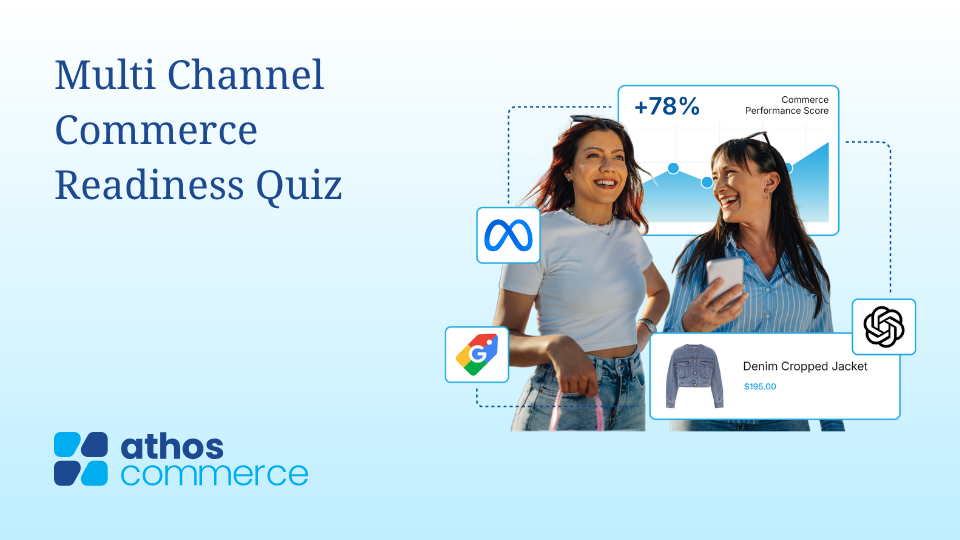
Assess your multi-channel commerce readiness in minutes. Identify gaps in product data, discovery, and channel strategy with actionable insights to improve performance.
An AI shopping assistant that trains on your product catalog, understands shopper intent, and keeps every conversation going until the sale.
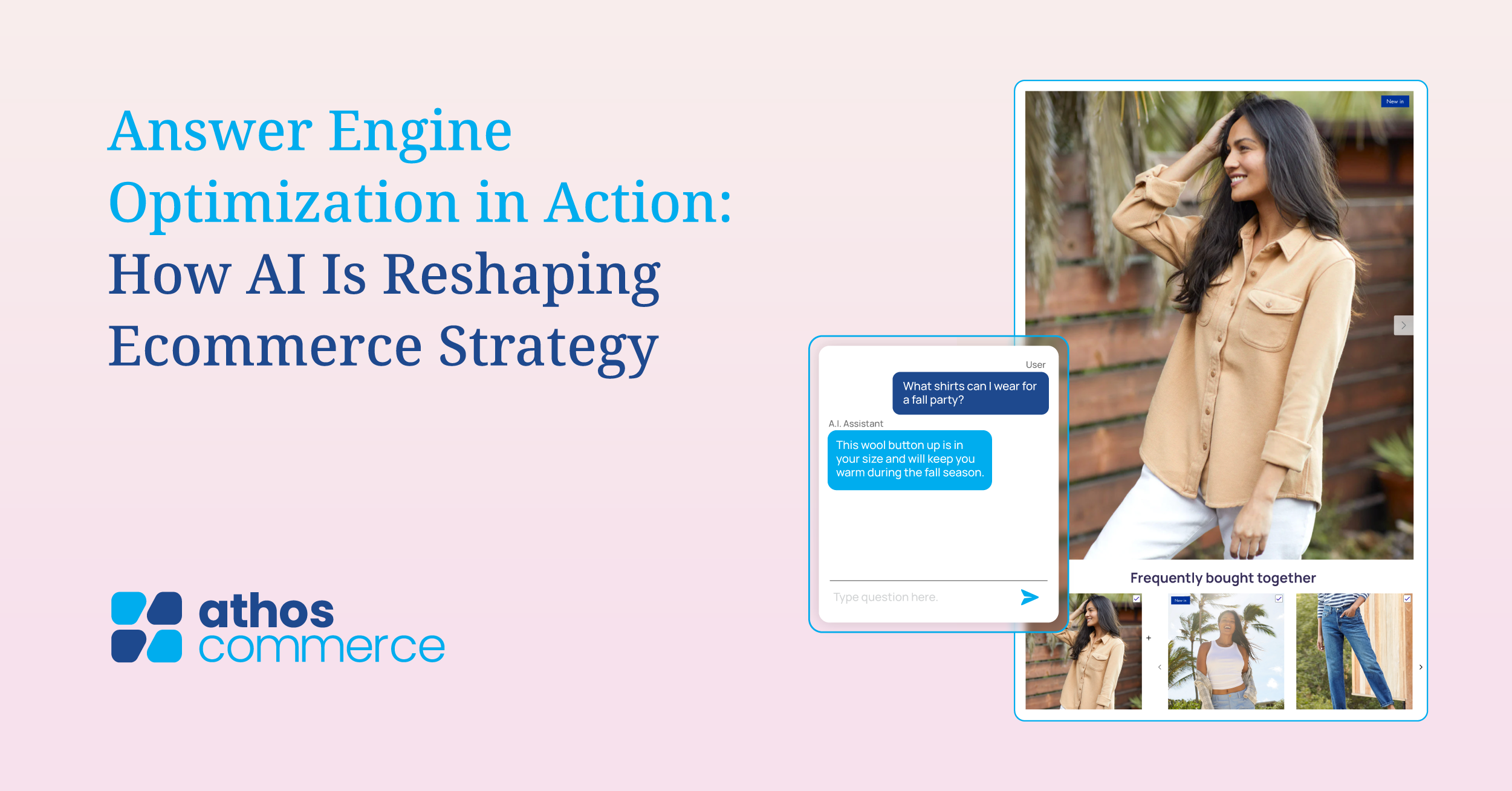
It understands intent, not just keywords. It surfaces the right product instantly and lets shoppers search with images or text, while keeping conversations persistent so no online shopper ever has to start over.


Understand what shoppers actually mean, not just what they type, and surface the right product every time, cutting friction and reducing abandonment.

Let shoppers find products using text, images, or both so they can describe what they want in any way and get to the right result faster and more intuitively.

Persistent conversation threads remember shopper preferences and context, so they can return anytime and continue where they left off, reducing abandonment and turning browsers into repeat buyers.
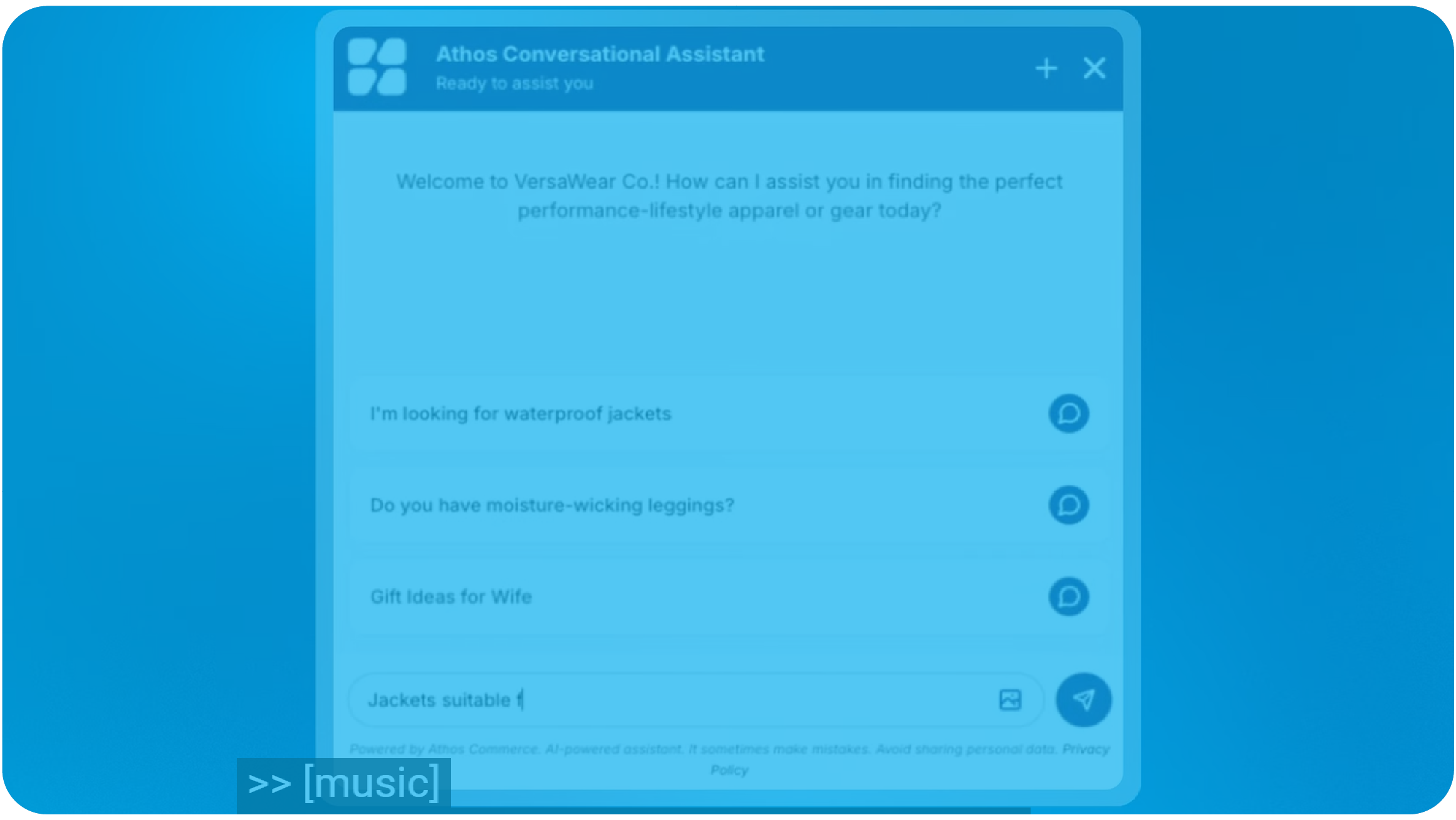
The Conversational Assistant understands what shoppers mean, not just what they type. It surfaces the right product faster using text, images, or both for a more intuitive shopping experience.
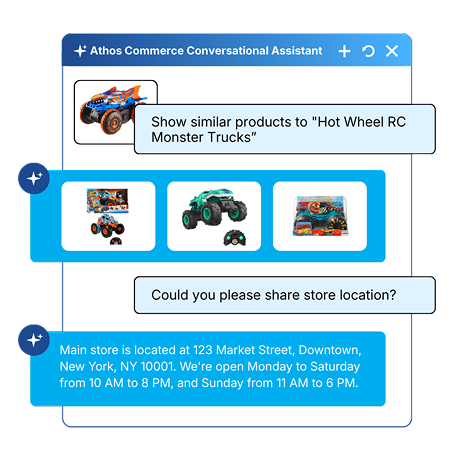
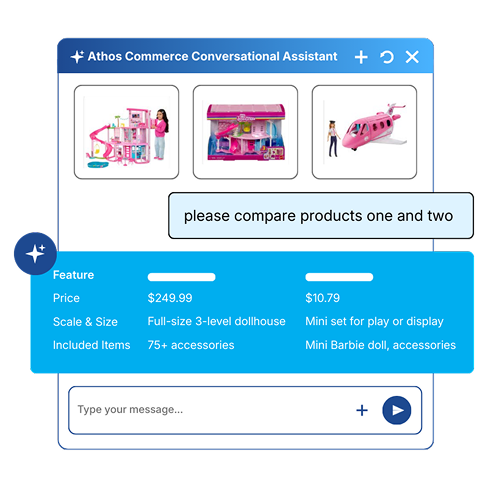
Help shoppers compare, evaluate, and choose with confidence. Comparison tables, product recommendations, and in-conversation support make decision-making easier at every stage of the journey.
Let shoppers find products using text, images, or both for faster and more intuitive product discovery.

Understand what shoppers are really looking for and guide them to the right product right away.

Show full product details inside the conversation so shoppers never have to leave to browse.

Generate side by side comparisons on request so shoppers can evaluate options and choose faster.

Suggest similar or complementary products directly in conversation to help shoppers discover the best fit.

Answer questions about store locations, shipping, returns, and policies all within the conversation.

Store chats as threads so shoppers can return and pick up exactly where they left off.

Prevent inappropriate or off-brand responses with built-in AI safety guardrails.
API-powered feeds, 50% more SKUs reaching customers

number of SKU’s shown to customers
increase in ROAS

We are delighted with the scale of what we have been able to achieve since integrating with Athos and their Google modules, and now it will be easier to add more product attributes to support our customers’ shopping discovery journey.
Conversational Assistant is an AI-powered shopping assistant that trains on your product catalog, web copy, and content to guide shoppers through discovery and purchase. Unlike traditional chatbots that follow scripts and react to keywords, Conversational Assistant understands shopper intent, asks clarifying questions, and proactively surfaces the right product at the right moment.
Conversational Assistant ingests your product catalog, web copy, and existing content during onboarding. The AI learns your product attributes, brand voice, and policies so every response is grounded in your actual inventory and aligned to your standards. There is no manual scripting required, and the assistant updates as your catalog evolves.
Conversational Assistant supports Multimodal Search, which allows shoppers to search using text, images, or both. A shopper can upload a photo of a product they like, and the assistant will surface matching items from your catalog, making product discovery faster and more intuitive for shoppers who cannot find the words to describe what they want.
Conversational Assistant includes built-in AI safety guardrails that restrict responses to content grounded in your catalog and approved policies. It is trained exclusively on your brand data, which means it cannot generate responses outside of your defined boundaries. Retailers maintain full visibility and control over the assistant’s behavior at all times.
Yes. Conversational Assistant is designed to handle in-conversation questions about store locations, shipping timelines, return policies, and other service topics through its Immersive Shopping capability. Responses are grounded in your approved content, so the assistant stays within the boundaries you define during setup.
An AI shopping assistant is software that uses artificial intelligence to guide an online shopper through a store the way a helpful associate would. It reads questions written in plain natural language and replies with relevant products from your catalog. Shoppers get help in real time instead of scrolling through pages of filtered results. That kind of support makes online shopping feel closer to walking into a store and asking someone for help.
A general virtual assistant handles broad tasks like setting reminders or routing customer service requests. A virtual shopping assistant is built for retail. It knows your catalog, your pricing, and your policies, so it can recommend items and answer product questions on the spot. Think of it as a digital assistant trained for your digital storefront instead of a general-purpose helper. A retail shopping assistant stays focused on moving shoppers toward a purchase.
Conversational Assistant runs on natural language processing, machine learning, and generative AI. Natural language processing reads what a shopper types and works out the intent behind it. Machine learning sharpens results as more shoppers interact with your ecommerce website. Generative AI writes the replies, and built-in guardrails keep every answer grounded in your approved content.
Yes. Shoppers can ask about shipping timelines, returns, store locations, and account information that you choose to make available. Athos Commerce personalization also draws on shopper behavior and purchase history to shape what the assistant recommends. Answering these questions in the chat keeps shoppers moving instead of sending them to a separate help page.
Agentic commerce describes shopping where an AI agent acts on the shopper’s behalf to find, compare, and evaluate products. Conversational Assistant works as an agentic shopping assistant inside your store. It asks clarifying questions, narrows the options, and builds comparisons without making the shopper start a new search. The retail landscape is moving toward AI-driven buying, and this behavior keeps your digital storefront ready for it.
Conversational Assistant works across ecommerce sites on both desktop and mobile browsers. It can also be extended into a mobile app through Athos Commerce APIs. The online shopping experience stays the same everywhere a shopper lands. That consistency improves customer experience and stops people from bouncing between channels to get one answer.
Stores with large or detailed catalogs see the biggest gains. Fashion, home, automotive parts, and health sites all deal with shoppers who struggle to describe what they want. An AI-powered shopping assistant narrows thousands of options down to a handful of relevant products in one real-time conversation. Faster product discovery usually means fewer abandoned shopping carts.
Shoppers who use search and discovery tools convert at a higher rate than shoppers who browse on their own. Guiding someone to the right product faster leads to a higher conversion rate and fewer abandoned shopping carts. The assistant also supports purchase decisions with comparison tables, product recommendations, and customer reviews published on your product pages. You can track conversion rate by conversation inside Athos Commerce analytics.
An AI assistant answers repeat questions about sizing, stock, and shipping without a person stepping in. That frees your customer service team to work on issues that actually need a human. Merchandisers also learn what shoppers ask for and cannot find, which gives them better data for planning. The payoff is stronger operational efficiency without adding headcount.