






Answer engine optimization is the practice of structuring your content and product data so AI systems return your brand as the direct answer to a shopper question. Recent answer engine optimization news shows that AI-referred shoppers now convert better and spend more per visit than traffic from any other channel.
Shoppers stopped typing keywords. They ask full questions now, and they ask them inside generative AI platforms like ChatGPT, Google Gemini, and Perplexity, as well as Google AI Overviews. A shopper who once searched “wireless headphones” now asks which pair handles long flights and blocks engine noise.
That change moves the first moment of discovery off your website. It also raises the stakes on your product detail page, because the shoppers AI sends you arrive with sharper intent and less patience. The current AEO news points to a split in the work: earning visibility off-site now depends on how AI answer engines decide which products to name, and revenue still depends on what happens after those shoppers land.
What Is Answer Engine Optimization, and Why Does It Matter Now?
Answer engine optimization is the practice of structuring your content, entity data, and schema markup so AI answer engines can pull a direct answer from your pages. Search engine optimization earns a position in a list of links. AEO earns the answer itself.
What does the latest answer engine optimization news show?
The numbers moved fast. Adobe Analytics reported that AI-referral traffic to U.S. retail sites grew 62% year over year in July 2026, and 1,219% since October 2024. Those visitors also behave differently once they land on your site.
- They convert at a higher rate: AI-referred visits converted 60% better than non-AI traffic in July 2026.
- They spend more per visit: Shoppers arriving from AI sources generated 53% more revenue per visit than shoppers from other channels.
- They say engaged: AI-referred visitors spent 59% more time on retail sites and added products to their carts at a 28% higher rate.
“AI is quickly becoming the primary interface between consumers and their favorite brands.”
Vivek Pandya, Director, Adobe Digital Insights
How is AEO different from SEO and generative engine optimization?
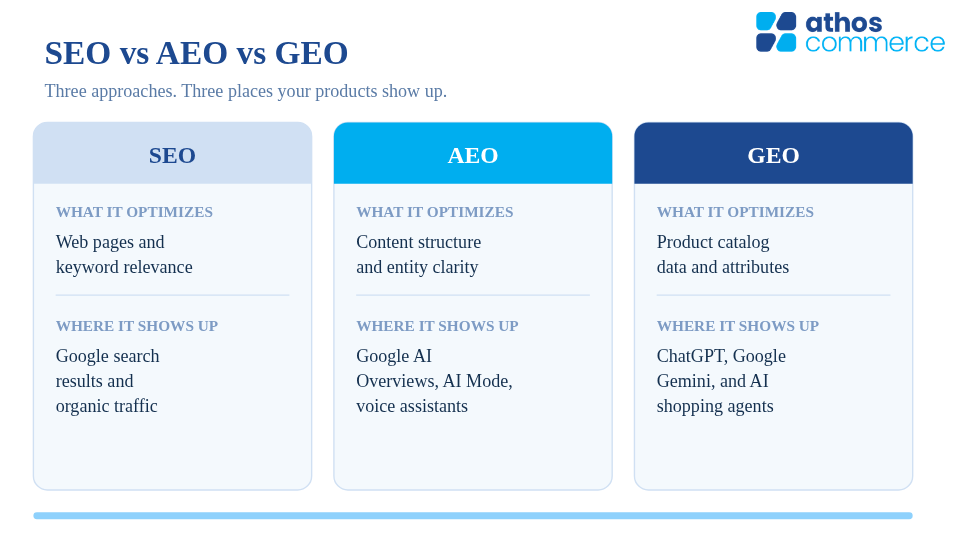
The three work together. They optimize different assets and show up in different places.
| Approach | What it optimizes | Where it shows up |
| Search engine optimization | Web pages and keyword relevance | Google search results and organic traffic |
| Answer engine optimization | Content structure and entity clarity | Google AI Overviews, AI Mode, and voice assistants |
| Generative engine optimization | Product catalog data and attributes | ChatGPT, Google Gemini, and AI shopping agents |
How Do AI Answer Engines Choose Which Products to Recommend?
AI-powered answer engines do not browse your store the way a shopper does. They retrieve structured information, compare it across sources, and repeat what they can read with confidence. Three factors decide if your catalog makes the cut.
Can machines actually read your pages?
Adobe found that 66% of individual product pages on retail websites can be read by large language models. The other third stays invisible to AI search. On some retail sites, up to 46% of content cannot be read by machines at all, which caps brand visibility before any content work begins.

Does your schema markup match your page?
Schema markup hands AI engines labeled facts instead of loose paragraphs. Product, FAQPage, and Organization markup all help. Google’s best practices tell publishers to keep structured data aligned with what visitors actually see on the page, so a mismatch between your markup and your copy works against you.
Google Search Central
Is your product feed ready for AI shopping?
Your product feed now feeds the answer engines. Semrush testing found that ChatGPT runs its own Google Shopping queries when it builds product carousels, which means feed quality shapes AI-generated responses. Missing attributes like material, fit, compatibility, and warranty give AI systems less to repeat about your products, and less reason to name you over a competitor with a cleaner catalog.
Why Do On-Site Answers Still Decide the Sale?
AEO wins the introduction. Your product detail page wins the order. A shopper who arrives from an AI answer already knows roughly what they want, and they expect the same fast, direct response from your site.
What do shoppers ask before they buy?
- Fit and sizing questions come first: Shoppers want to know how a product runs, what the measurements are, and how it compares to something they already own.
- Compatibility and materials questions follow: They ask what a product is made of, what it works with, and how to care for it.
- Logistics questions close the loop: Return windows, shipping timelines, and warranty terms decide the purchase more often than teams expect.
Specs buried in a tab and a long FAQ page force shoppers to hunt for answers. Many leave instead. A conversational assistant on the product page answers in the shopper’s own words, using content you have already published, so uncertainty gets resolved at the moment of consideration.
How do shopper questions become strategy?
Every question is a signal about intent or a gap in your product content. Track the questions asked most often and fix the underlying product data. Group shoppers by what they ask, then use those signals to sharpen campaigns across email, SMS, and paid channels. Your marketing team gets proprietary data that no competitor can copy.
How Do You Build an Answer-Led Ecommerce Strategy?
An answer-led strategy runs on three pillars. Each one covers a different stage of the shopper journey.
- Discoverability puts you in the answer: Add schema markup, write question-based headings, and build content that answers high-intent user queries so AI answer engines can cite you.
- Decision support keeps shoppers moving: Give complete product content, transparent policies, and real-time answers on the pages where shoppers decide.
- Answer intelligence turns questions into action: Review what shoppers and AI systems ask about your catalog, then feed those findings back into content creation, merchandising, and the work that builds brand authority.
What should your team audit first?
Start your AI search optimization with the gaps that cost you the most brand visibility.
- Check what AI can read: Test how much of your homepage, category pages, and product pages render as text an AI engine can parse.
- Validate your schema markup: Run your templates through a structured data test and fix mismatches between markup and visible copy.
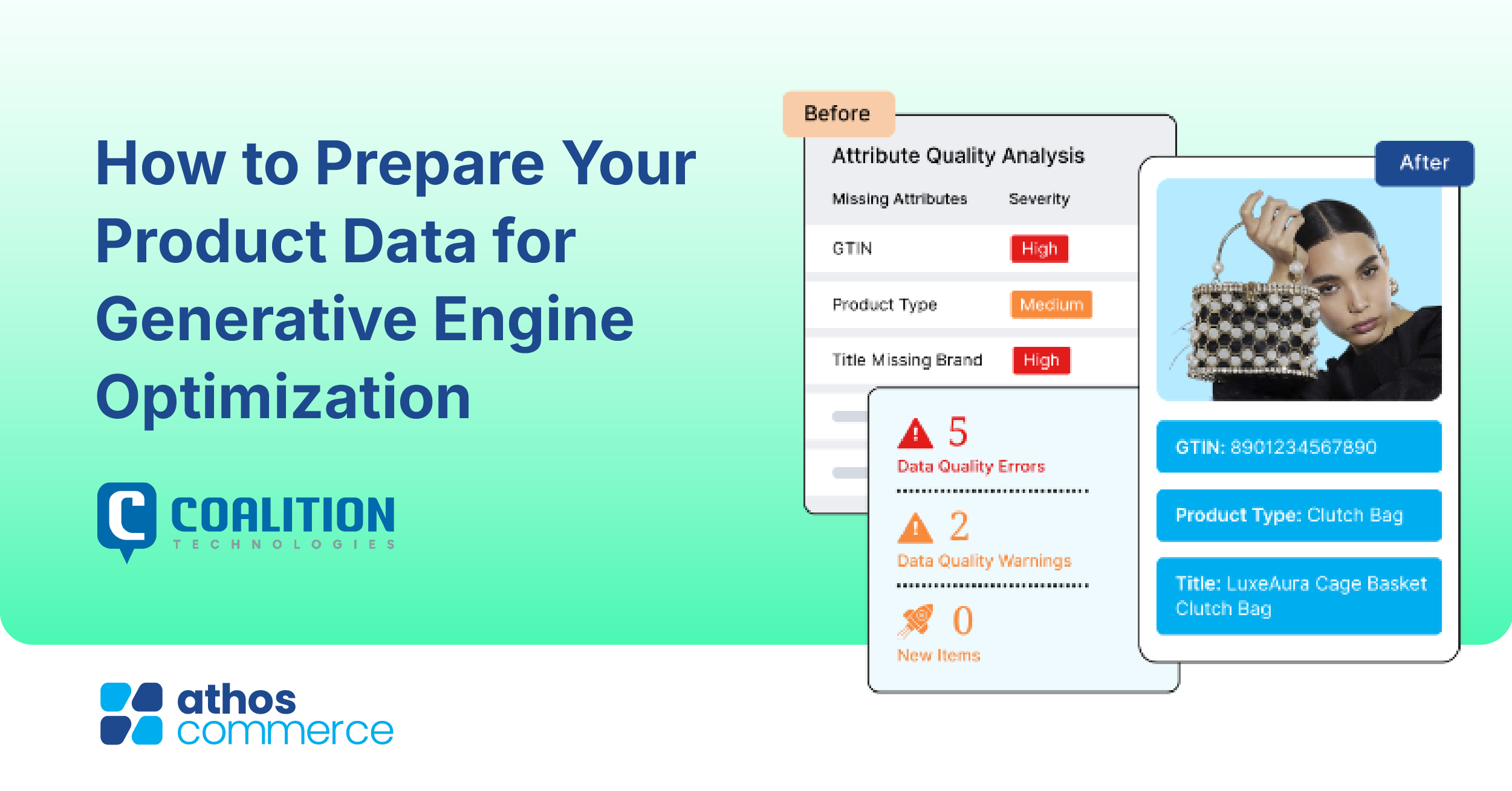
- Score your catalog attributes: Identify products missing the details that AI engines need to make a confident recommendation.
What comes next in AI shopping?
AI agents are moving from suggesting products to selecting them. Adobe’s survey found that 39% of consumers have used AI while shopping online, and 85% of that group said it improved the experience. A separate Adobe survey found that 66% of respondents believe AI tools deliver accurate results. As adoption grows, the merchants with rich, machine-readable product data will be the ones agents pick.
Athos Commerce: Your Partner in Answer Engine Optimization
Being present in search results no longer covers the whole journey. Ecommerce brands need to answer questions off-site, on-site, and inside the AI platforms shoppers now trust.
Athos Commerce brings those pieces together in one platform. The GEO Assistant enriches your catalog, optimizes it for AI answer engines, and syndicates it to ChatGPT and Google Gemini. The Conversational Assistant trains on your catalog and guides shoppers toward purchase on the pages where they decide. Product Feed Management audits, fixes, and distributes your listings across 1,400+ destinations, including marketplaces, social channels, and AI platforms.
Book a demo to see how Athos Commerce gets your products in front of shoppers wherever they ask their next question.
Frequently Asked Questions
What is answer engine optimization?
Answer engine optimization is the practice of structuring content, schema markup, and product data so AI answer engines return your brand as a direct answer. It targets AI-powered search surfaces like Google AI Overviews, AI Mode, ChatGPT, and Google Gemini rather than a ranked list of blue links.
Does AEO replace SEO?
No. AEO runs alongside search engine optimization. Traditional search still drives the majority of organic traffic, and AI systems frequently pull from pages that already rank well. AEO adds content structure, entity clarity, and clean product data on top of your existing SEO strategies.
How do I measure AI visibility?
Track referral traffic from AI platforms in your analytics, monitor how often your brand appears in AI-generated answers for your priority queries, and audit how much of your site is machine-readable. Watch conversion rate and revenue per visit from AI sources against your other channels.
Answer more shopper questions. Convert more loyal customers.
Being present in search results is no longer enough. To truly compete, ecommerce brands need to evolve into answer engines themselves. That means showing up when questions are asked, delivering clarity at the moment of consideration, and using shopper signals to personalize the entire journey.
The result? An ecommerce strategy based on answer engine optimization that turns intent into action and shoppers into loyal customers.
Ready to take the next step? Download our eBook, “What AI Wants,” for a deep dive into the technologies, strategies, and tools shaping answer-driven ecommerce.