






A strong Black Friday 2026 depends on an ecommerce website that loads fast, guides shoppers to the right products, and checks out without friction. Review your data early, sharpen site search and merchandising, personalize the experience, and audit your technical setup before traffic spikes.
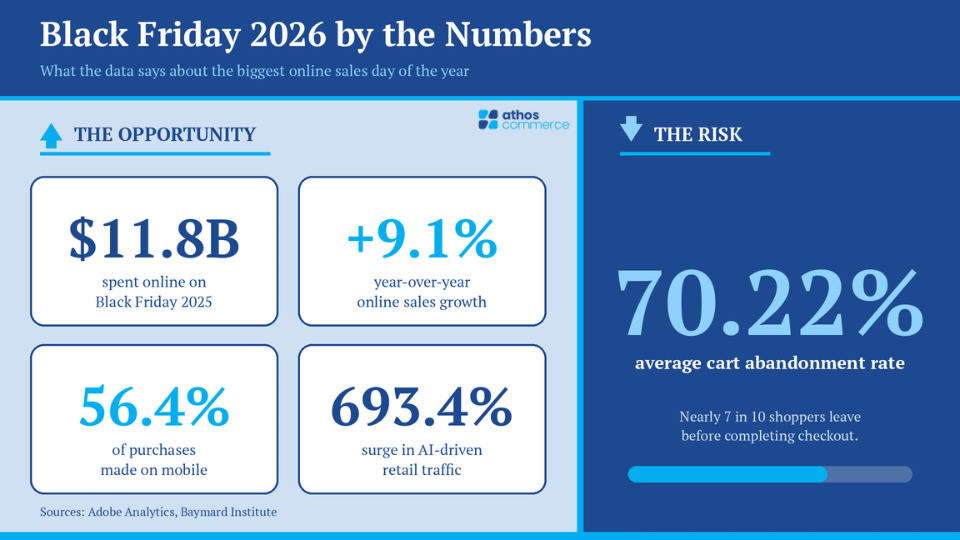
Black Friday is the biggest online shopping day of the year. Shoppers spent $11.8 billion online during Black Friday 2025, up 9.1% from the year before, and more than half of those purchases happened on a phone. Those numbers keep climbing, which raises the stakes for every online store. Retailers who win the weekend prepare weeks ahead and test often. Five areas decide whether your store is ready. Lock them down before the deals go live and your online store stays fast, findable, and ready to convert every visitor who lands on it.
The Ecommerce Website Checklist for Black Friday 2026
Work through these five areas in order. Each one builds on the last, moving from the data that shapes your plan to the technical checks that keep the site standing when traffic peaks.
| Area | What to check |
| Reports | Shopper data, top searches, zero results, sales history |
| Product discovery | Site search, synonyms, filters, navigation |
| Merchandising | Landing pages, banners, badges, boost rules |
| Personalization | Recommendations, geo-targeting, email, upsells |
| Technical audit | Site speed, checkout, payment security, broken links |
Which Reports Should You Review First?
Before planning campaigns or site changes, look at what your data already tells you. Your reports point to the products shoppers want, the terms they search, and the gaps in their experience. Pull these first:
- Review shopper behavior reports to guide your merchandising and targeting decisions.
- Study your top search queries for campaign angles and landing page ideas.
- Check the zero-results report to find gaps between shopper language and your catalog.
- Compare last year’s sales and product data to forecast Black Friday inventory.
- Read Google Analytics and Google Search Console for traffic sources, top landing pages, and conversion trends.
Google Analytics and Google Search Console show where potential customers enter the site and where they drop off. That baseline shapes every other decision on this list.
How Do You Make Products Easy to Find?
Black Friday shoppers move fast and buy on impulse. If your search engine cannot match what they type, they leave for a competitor. Sharpen product discovery with these checks:
- Turn on autocomplete and autocorrect to catch misspelled queries.
- Add synonyms so different words for the same product lead to the same product page.
- Rebuild your zero-results page with suggested products instead of a dead end.
- Simplify product filters around Black Friday needs like price, size, and deals.
- Update site navigation to put gift guides and sale pages one click from the homepage.
AI has changed how people find products, on your own site and beyond it. Traffic to retail sites from generative AI tools jumped 693.4% year over year during the 2025 holiday season. A store with clean product data and strong search stands a better chance of getting surfaced when a shopper asks an AI assistant for a recommendation.
“This 2025 holiday season, consumers embraced generative AI more than ever as a shopping assistant in their purchasing decisions.”
Vivek Pandya, Lead Analyst, Adobe Digital Insights
What Merchandising Moves Drive Black Friday Sales?
Merchandising decides what shoppers see first and how quickly a deal grabs their attention. Small placement choices add up across thousands of visitors. Put these in place before your campaigns launch:
- Build landing pages that match each campaign and the way shoppers browse.
- Add homepage, category, and inline banners that point to your top offers.
- Place promotional badges on discounted items and low-stock products.
- Set boost rules that push high-margin and best-selling products up the results.
- Pull out-of-stock items from view automatically to avoid dead clicks.
- Schedule promotions to start and end on their own at set times.
A tidy category page with clear offers keeps momentum going. When the layout does the selling, your team spends less time firefighting during the busiest hours of the year.
Can Personalization Lift Your Conversion Rate?
Black Friday inboxes and feeds overflow with generic offers. A shopping experience shaped around each visitor stands out and converts better. Personalization raises conversion rate and average order value when you apply it across the journey:
- Tailor search and merchandising results to each shopper’s browsing behavior.
- Use location signals to show relevant products, shipping, and offers.
- Recommend items that reflect what a shopper has viewed or bought before.
- Cross-sell and upsell related products to lift average order value.
- Send personalized email recommendations that pull shoppers back to the site.
- Plan a post-sale flow that turns first-time Black Friday buyers into repeat customers.
Personalization works because it treats the return visitor and the first-time shopper differently. That relevance keeps a busy shopper on the page long enough to buy.
Is Your Ecommerce Website Ready for the Traffic?
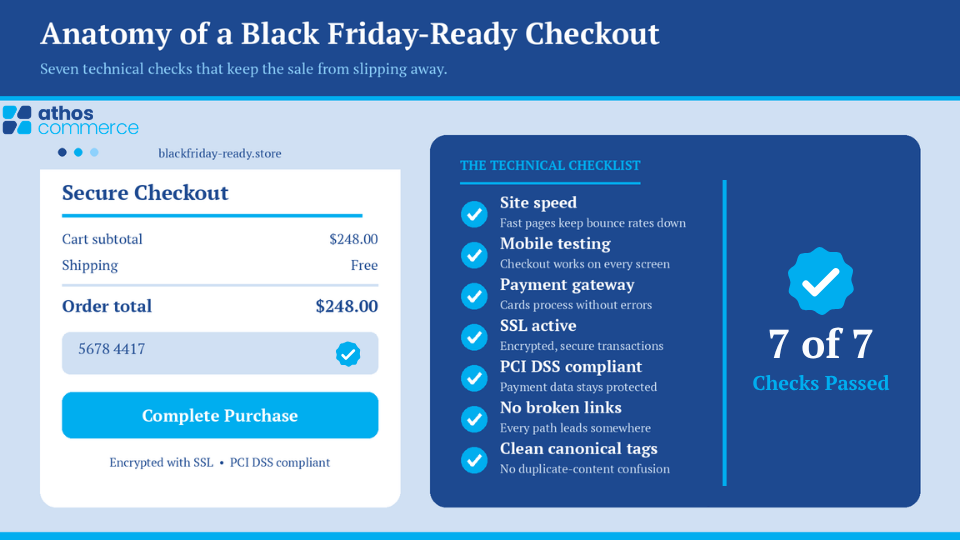
The basics decide whether all the planning pays off. A crash, a bug, or a slow page during peak hours erases the work. Run an ecommerce website audit and confirm the technical pieces hold:
- Optimize site speed to lower bounce rates and hold shopper attention.
- Test the mobile checkout process end to end on real devices.
- Confirm your payment gateway accepts major credit and debit cards without errors.
- Verify SSL (Secure Sockets Layer) is active for secure transactions.
- Meet PCI DSS standards to protect payment data and keep transactions compliant.
- Crawl the site for any broken links and fix canonical tags that confuse search results.
- Refresh your FAQ, shipping, and return policy pages, then test every contact option.
Checkout is where sales are won or lost. The average shopping cart abandonment rate sits at 70.22%, and it is estimated that $260 billion in orders is recoverable through better checkout design.
A short, tested checkout process is one of the highest-return fixes on this list.
Athos Commerce: Your Partner in Black Friday 2026 Readiness
A profitable Black Friday comes down to early planning and steady testing. Work this checklist from the top, starting with your reports and ending with a technical audit, and you give your online store the best shot at converting the surge of holiday traffic.
Athos Commerce brings site search, personalization, merchandising, and product feed management into one product discovery platform built for mid-market Shopify stores. The platform helps shoppers find the right products faster, gives your team control over what appears on the page, and syndicates your catalog across marketplaces, social media channels, and AI tools like ChatGPT and Gemini.
Ready to get your store Black Friday ready? Request a demo and see how Athos Commerce drives discovery across every channel.
Frequently Asked Questions
What is an ecommerce website checklist?
An ecommerce website checklist is a list of the site, marketing, and technical tasks an online store completes before a major sales event. For Black Friday 2026, it covers reports, site search, merchandising, personalization, and a technical audit of speed, checkout, and security.
When should you start preparing for Black Friday 2026?
Start four to six weeks out. Early preparation gives you time to review data, fix site issues, test the checkout process, and brief your team before traffic climbs.
What is the most important part of Black Friday website prep?
Checkout and site performance return the most. With cart abandonment above 70%, a fast site and a short, tested checkout process protect the sales your campaigns work to bring in.
How do you improve user experience on your ecommerce site during Black Friday?
A fast, clear site is the solid foundation of a good user experience. Cut load times, simplify navigation, and make product filters obvious. A smooth customer experience keeps shoppers moving toward checkout instead of leaving for another store.
Should you run A/B testing before Black Friday 2026?
Yes. A/B testing shows which product page layouts, offers, and calls to action convert best. Test early in the fall, lock in the winners, and avoid experimenting during peak traffic when every visit counts.
How does email marketing help online retailers on Black Friday?
Email marketing brings shoppers back to your online store with early-access offers, abandoned cart reminders, and personalized product picks. Online retailers who segment their lists see stronger open rates and repeat purchases through the holiday weekend.
Why does inventory management matter for your ecommerce store?
Inventory management keeps your best sellers in stock and pulls sold-out items from view before they frustrate shoppers. Accurate counts protect the customer experience and stop your ecommerce store from promoting products it cannot ship.