






Ecommerce merchandising is the practice of arranging, promoting, and presenting products on an online store so shoppers can find what they want and buy it. It covers everything from category page order and search results to product recommendations, imagery, and promotional campaigns.
Ecommerce merchandising goes by several names. You will hear it called visual merchandising, digital merchandising, online merchandising, or product merchandising. The goal behind each term is the same. You arrange products with purpose, so the shopping experience feels easy, and the conversion rate climbs.
Some merchandising happens through tools built into your ecommerce platform. Most of the work that moves revenue requires a dedicated product discovery platform. The difference shows up in control. A dedicated platform lets a team adjust sort order, search relevance, and recommendation logic on an ecommerce site without waiting on a developer.
What Is Ecommerce Merchandising and Why Does It Matter?
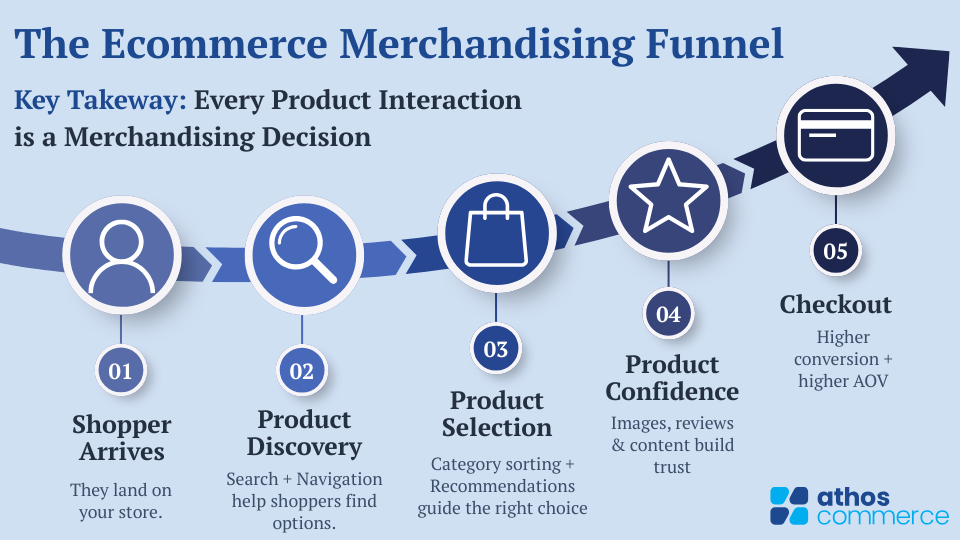
Ecommerce merchandising is how you decide which products appear, where they appear, and in what order across your ecommerce website. Every collection, search result, and product page reflects a merchandising decision, whether you made it deliberately or let the platform default handle it.
What Does Ecommerce Merchandising Include?
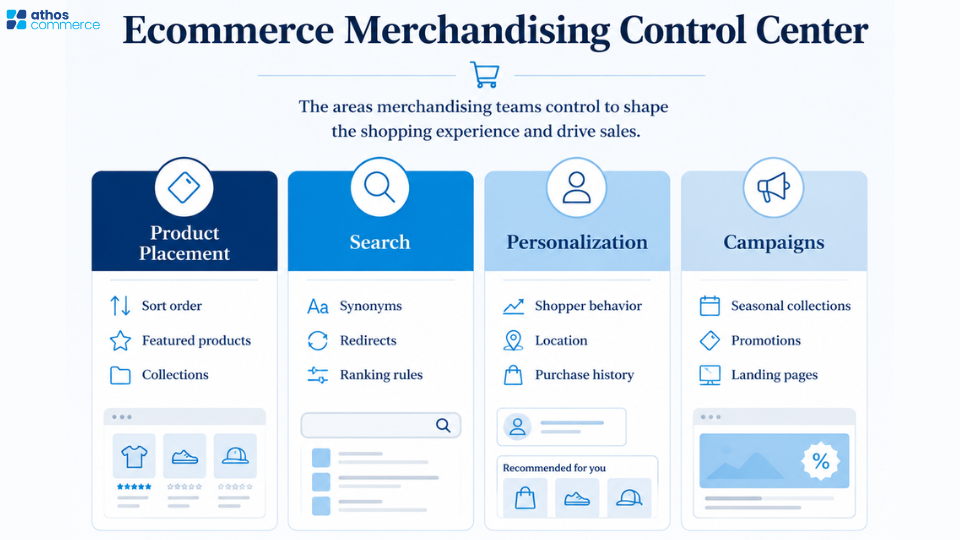
- Product placement and sort order: You control which items sit at the top of a category page and which get pushed down.
- On-site search tuning: You decide how search results respond to shopper language, synonyms, and misspellings.
- Product recommendations: You surface similar products and related products at the moments shoppers are most open to them.
- Visual elements and digital content: High-quality images, video, and copy give online shoppers the confidence to buy.
- Marketing campaigns and landing pages: Seasonal collections keep digital marketing messaging consistent across the store.
Why Is Ecommerce Merchandising Important?
Price is rarely the deciding factor anymore, because online shoppers can find comparable products at similar prices in a few clicks. The shopping experience is what separates one online retailer from the next. Customer experience decides where the order lands. Strong merchandising creates an engaging experience, builds brand identity, and lifts average order value by putting the right product in front of the right shopper at the right time.
The stakes are measurable. Baymard Institute tracks a global average cart abandonment rate of 70.19 percent across 49 studies, which means most product discovery work never reaches a completed order. Merchandising is one of the few levers that improves the experience before a shopper ever reaches checkout.
How Does Online Merchandising Differ From a Brick-and-Mortar Store?
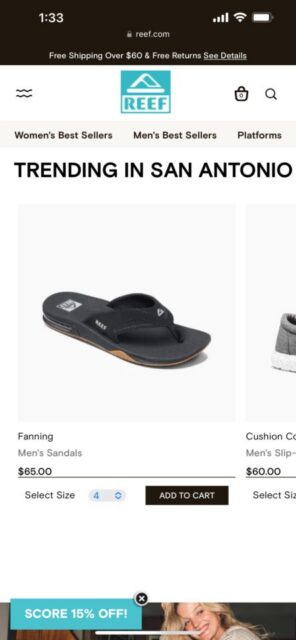
In a physical store, a merchandiser controls one floor plan that every customer walks through. Online, every shopper can see a different arrangement. Artificial intelligence lets an ecommerce business tailor product placement to browsing behavior, past purchases, device type, and location. That flexibility is the biggest advantage digital commerce holds over a brick-and-mortar store.
What Are the Core Ecommerce Merchandising Strategies?
Effective ecommerce merchandising rests on four practices. Each one addresses a different part of the customer journey, and together they cover the path from landing page to add to cart.
How Should You Arrange Products on a Category Page?
Group products the way shoppers actually shop. Picture a boutique display of swimsuits. The rack sits next to sunglasses, sandals, hats, and beach bags, because the store understands the occasion behind the purchase. Your category page should work the same way.
Use merchandising rules to boost products that deserve visibility and bury the ones that hurt the experience:
- Boost high-converting products: Items with proven add-to-cart rates earn top placement.
- Boost high-margin and trending items: Profitability and momentum both belong in your sort logic.
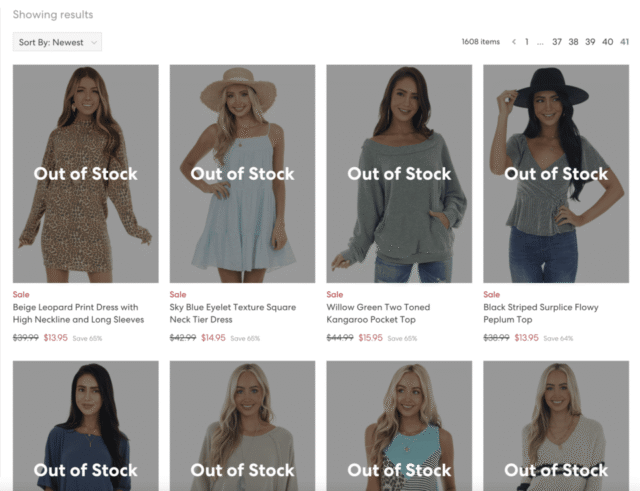
- Bury out-of-stock products: Move unavailable items to the bottom and tell shoppers when they return.
- Pin campaign products: Lock promotional items into position during a marketing push.
How Does On-Site Search Drive Product Discovery?
Search is where intent shows up. Roughly half of shoppers in Baymard’s usability testing reach for search rather than navigation, yet the same 2026 benchmark found 56 percent of ecommerce sites deliver mediocre or worse search experiences.
“If customers can’t find a product, they can’t buy it.”
Christian Holst, Co-Founder and Research Director, Baymard Institute
Fixing search starts with your zero-result queries. Pull the list, then map those searches to products that already exist in your catalog. Most gaps come from synonym coverage, not missing inventory.
How Do Product Recommendations Boost Sales?
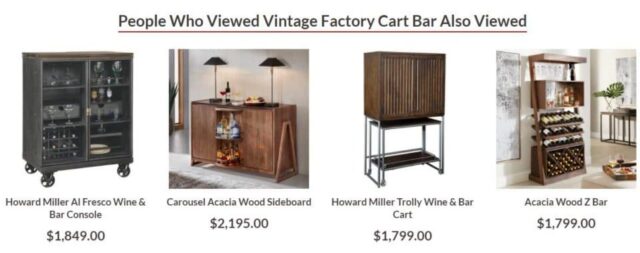
Recommendations work because they answer the question a shopper has not asked yet. They also smooth the user experience by shortening the path between products. Cross-sell complementary items on the product page. Upsell an upgraded model when the shopper is comparing options. Show personalized picks on the homepage for returning visitors. Each placement lifts average order value without adding traffic cost.
What Role Do Visual Elements Play?
High-quality images carry most of the persuasion in online shopping. Show multiple angles, scale references, and lifestyle context. User-generated content such as customer photos and reviews adds proof that product copy cannot provide on its own. Compress every asset for mobile devices, because a slow gallery ruins the online shopping experience before the shopper sees the third image.
How Do You Measure Effective Ecommerce Merchandising?
Merchandising decisions should be data-driven decisions. Set a baseline before you change anything, then watch a small set of numbers that connect directly to revenue.
|
Metric |
What It Tells You |
Where to Find It |
|
Conversion rate by landing page |
Whether your product placement matches customer needs |
Google Analytics |
|
Search exit rate |
Whether search results satisfy shopper intent |
Site search reporting |
|
Zero-result query volume |
Where shopper language and product listings disagree |
Site search reporting |
|
Average order value |
Whether recommendations and bundles are working |
Ecommerce reporting |
|
Add-to-cart rate by category |
Which collections need merchandising attention first |
Google Analytics |
What Is the Best Practice for Testing Changes?
Change one variable at a time. Run a sort-order test on a single collection for two full weeks, then compare add-to-cart rate against the previous period. Testing an entire ecommerce store at once tells you that something moved, but it never tells you what.
Quick Merchandising Checklist
- Audit your top 20 category pages: Confirm best sellers appear above the fold on mobile devices.
- Review zero-result searches monthly: Add synonyms and redirects for the queries that repeat.
- Refresh seasonal collections on a calendar: Outdated campaigns damage customer satisfaction and brand identity.
- Check product listings for feed accuracy: Inconsistent data limits visibility in every search engine and marketplace.
Merchandising does not stop at your own site. Amazon, Instagram, and Google Shopping each have their own image requirements and character limits, so product listings need copy and imagery built for that space. The Black Friday and Cyber Monday checklist webinar walks through preparing those channels ahead of a peak season.
Athos Commerce: Your Partner in Ecommerce Merchandising
Ecommerce merchandising is the difference between a catalog shoppers scroll past and a store that guides them to the right product. Arrange products with intent, tune on-site search, place recommendations where they help, and measure what changes.
Athos Commerce brings onsite search, personalization, merchandising, and product feed management into one platform built for growing Shopify, Magento, BigCommerce, and Miva merchants. Its AI reads shopper intent beyond keywords, gives merchandising teams granular control without code, and syndicates accurate product data across 1,400+ destinations including marketplaces, social channels, and AI platforms.
Request a demo today to see how better product discovery improves your conversion rate.
Frequently Asked Questions
What Is Ecommerce Merchandising in Simple Terms?
Ecommerce merchandising is how you arrange and present products on an online store. It includes sort order on collection pages, search result relevance, product recommendations, imagery, and promotional campaigns. The purpose is to help shoppers find the right product quickly and to boost conversions.
What Is the Difference Between Visual Merchandising and Ecommerce Merchandising?
Visual merchandising refers to the presentation layer, meaning imagery, layout, and digital content that shape how products look. Ecommerce merchandising is the broader practice. It includes visual merchandising along with search relevance, product placement logic, personalization, and campaign management.
Do Small Online Retailers Need a Merchandising Tool?
Native platform controls handle a small catalog. Once a store carries enough products that shoppers rely on search and filters to navigate, manual sorting stops scaling. Most merchants reach that point somewhere between a few hundred and a few thousand SKUs.
How Does Artificial Intelligence Change Ecommerce Merchandising?
Artificial intelligence ranks products for each individual shopper based on session behavior, browsing history, and context. Rule-based systems apply the same order to everyone. AI also handles the long tail of search queries that no rules library can cover, which improves product discovery across the entire catalog.