







Self-Learning Merchandising
Get AI-recommended promotions based on past performance and shopper behavior.
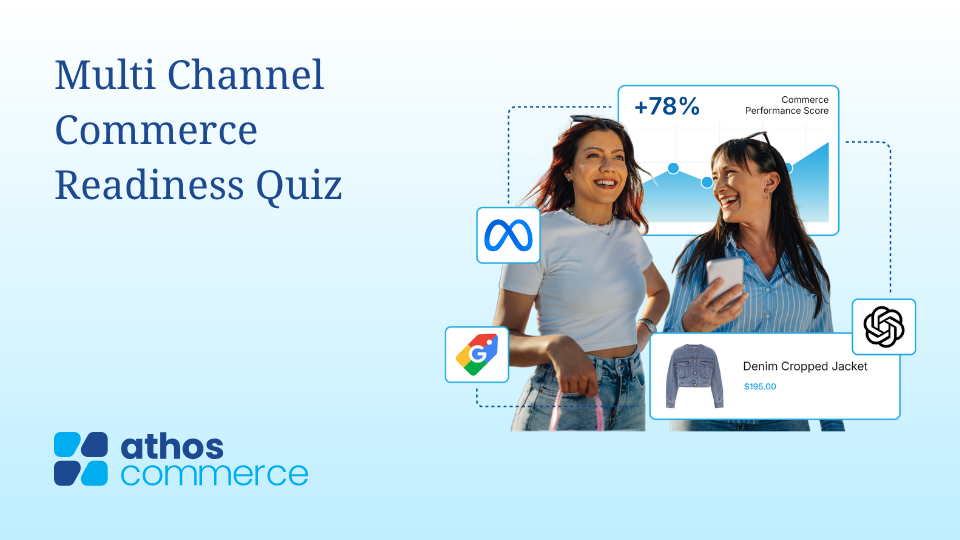
Assess your multi-channel commerce readiness in minutes. Identify gaps in product data, discovery, and channel strategy with actionable insights to improve performance.
Curate, test, and optimize product placements exactly when it matters most.
A visual merchandising platform that gives ecommerce teams direct control over product placement across search results, category pages, and campaigns. From boosting best sellers to automating promotion rules to A/B testing every variation, it empowers your team to move in seconds, not days, and scale only what wins.
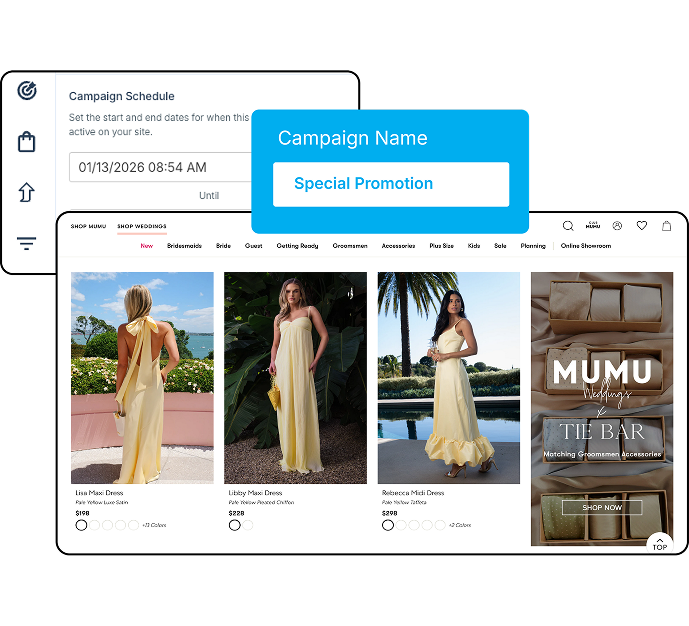

Adjust product placement in seconds, not days. Respond to trends, inventory shifts, customer behavior, and seasonal demand without waiting on developers or manual workflows.

Create promotion rules once and let automation handle the rest. Athos Commerce continuously applies your logic across inventory, trends, and customer segments.

Run A/B tests on any merchandising strategy, measure what actually drives your conversion rate, and deploy winners instantly without guesswork or gut-feel decisions.
Athos Commerce uses artificial intelligence to analyze past campaign data and shopper behavior to surface the highest-impact promotions, so your team spends less time guessing and more time scaling what converts.
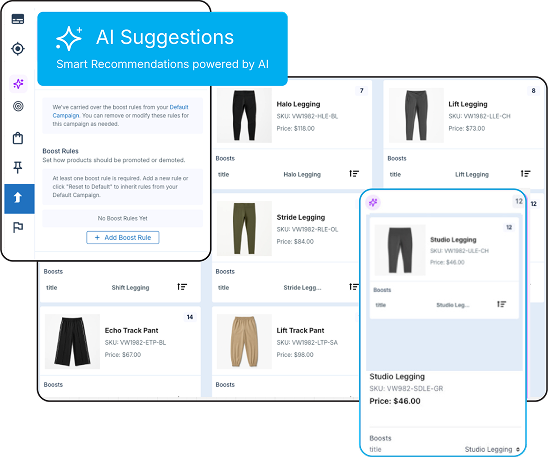
Control product placement across search results, category pages, and landing pages. Boost best sellers, surface the most relevant variants, and apply visual badges.
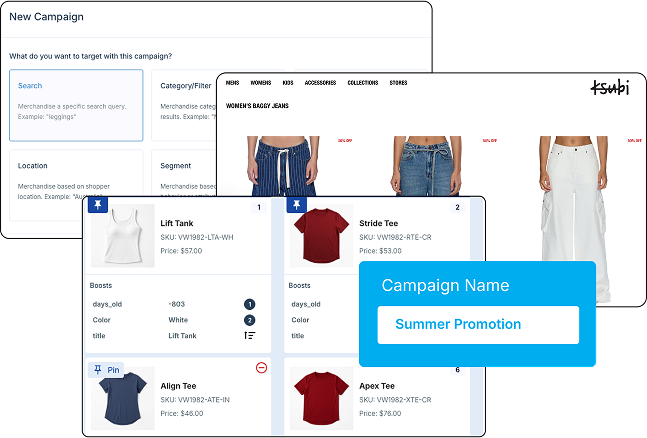
Launch global or targeted marketing campaigns by geography, segment, or inventory state. Use the rules engine to automate boost logic and manage every active campaign from one place.
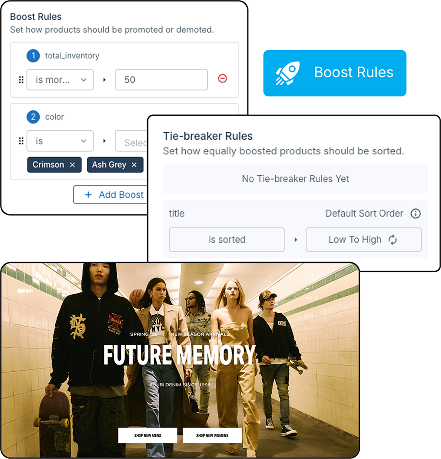
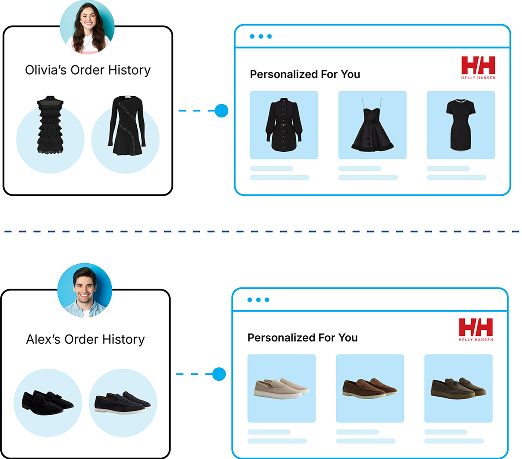
Rerank product displays in real time using shopper history, live intent signals, and segment data so every visitor sees a shopping experience tailored to them, at scale.
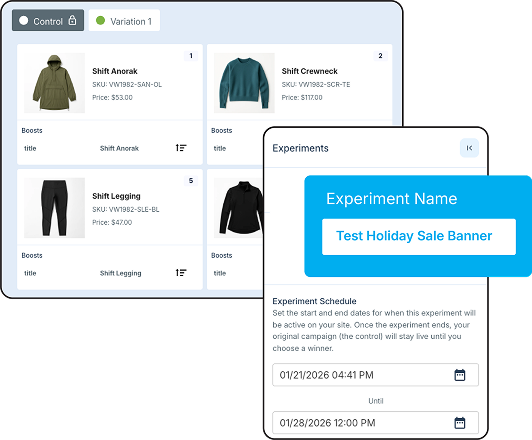
Test variations of product ranking, pins, banners, and boost rules. Schedule experiments, control timing, and deploy the winner automatically once conversion rate data makes the answer clear.
Get AI-recommended promotions based on past performance and shopper behavior.

Get ranked product recommendations based on conversion potential, demand, seasonality, and stock levels.

Control product placement for specific search terms.

Curate product order to highlight best sellers or strategic items.

Build targeted displays for promotional campaigns and seasonal events.

Surface the most relevant color, size, or style options.

Apply visual elements highlighting new arrivals, banners, promotions, or bestsellers.

Deploy site-wide campaigns across your entire catalog.

Boost products by geography, customer segment, or customer behavior.

Automate promotion logic based on inventory, trends, or custom conditions

Schedule launches, duplicate campaigns, add banners, and pin products.

Organize and search all active and past campaigns.

Rerank products based on what they’ve browsed and bought before.

Surface similar products as shoppers reveal preferences in the current session.

Tailor merchandising for different customer types without losing control.

Let machine learning adjust positioning while you set the strategy.

Test multiple strategies side by side to see what actually works.

Differentiate tests with pins, banners, boost rules, or personalization.

Schedule duration and control exactly when each variation runs.

Deploy the winner based on actual conversion data, not hunches.
Smarter category pages, 300% more search revenue

increase in search-led revenue
year-on-year increase in conversion rate

We can now provide our customers with a much more intuitive shopping experience. The search functionality has improved significantly, allowing users to find what they’re looking for. The color enrichment and normalization tools ensure customers see products in the correct shade, however they search.
We integrate with the platforms your team already runs, including Shopify, Magento, BigCommerce, Salesforce Commerce Cloud, and more. Our APIs are well documented and built for composable, headless environments, so your developers aren’t starting from scratch. Most teams are live and merchandising within weeks.
No. Once we’re integrated, your merchandising team runs everything through a visual, no-code interface. Boost rules, campaign scheduling, product pinning, A/B tests. All of it is managed without writing a line of code. Developers set it up once; your team owns it from there.
We designed it so your team always has the final word. AI surfaces recommendations and automates rules based on performance data, but you approve, override, or adjust anything at any time. Think of it as a system that handles the heavy lifting while your strategy sets the boundaries it operates within.
Native platform tools give you basic sorting and product pinning. We give you rules-based automation across your entire catalog, personalization by shopper segment, A/B testing with real conversion rate data, and AI recommendations in one place.
Most teams are live within a few weeks. Onboarding includes platform integration, catalog configuration, and a guided setup of your first campaigns and rules. From there, your merchandising team can operate independently. We stay involved as long as you need us to, with ongoing support available as your strategy scales.
Ecommerce merchandising is the practice of deciding which products appear where on your online store. It covers the order of products on a category page, what shows up in a search result, and which items get promoted on the homepage. A brick-and-mortar store does this with shelves, signage, and window displays. Digital merchandising does the same job with ranking rules, badges, and visual elements on screen.
The goal is the same, but the tools are different. Visual merchandising in a physical shop relies on layout, lighting, and displays that a customer walks past. Online merchandising relies on product order, imagery, and filtering that a shopper scrolls through. Online shopping also gives you something a shelf never could, which is data on every click. That lets you change placement in minutes instead of rebuilding a display.
Placement changes what people see, and what people see changes what they buy. When the right product shows up early in the customer journey, a potential customer spends less time hunting and more time buying. Better product discovery usually shows up as a higher conversion rate, a higher average order value, and fewer exits from search. Our customers have seen a 17% year-on-year lift in conversion rate and a 300% increase in search-led revenue.
Good merchandising starts with your target audience and works backward. A few best-practice habits apply to almost every ecommerce site:
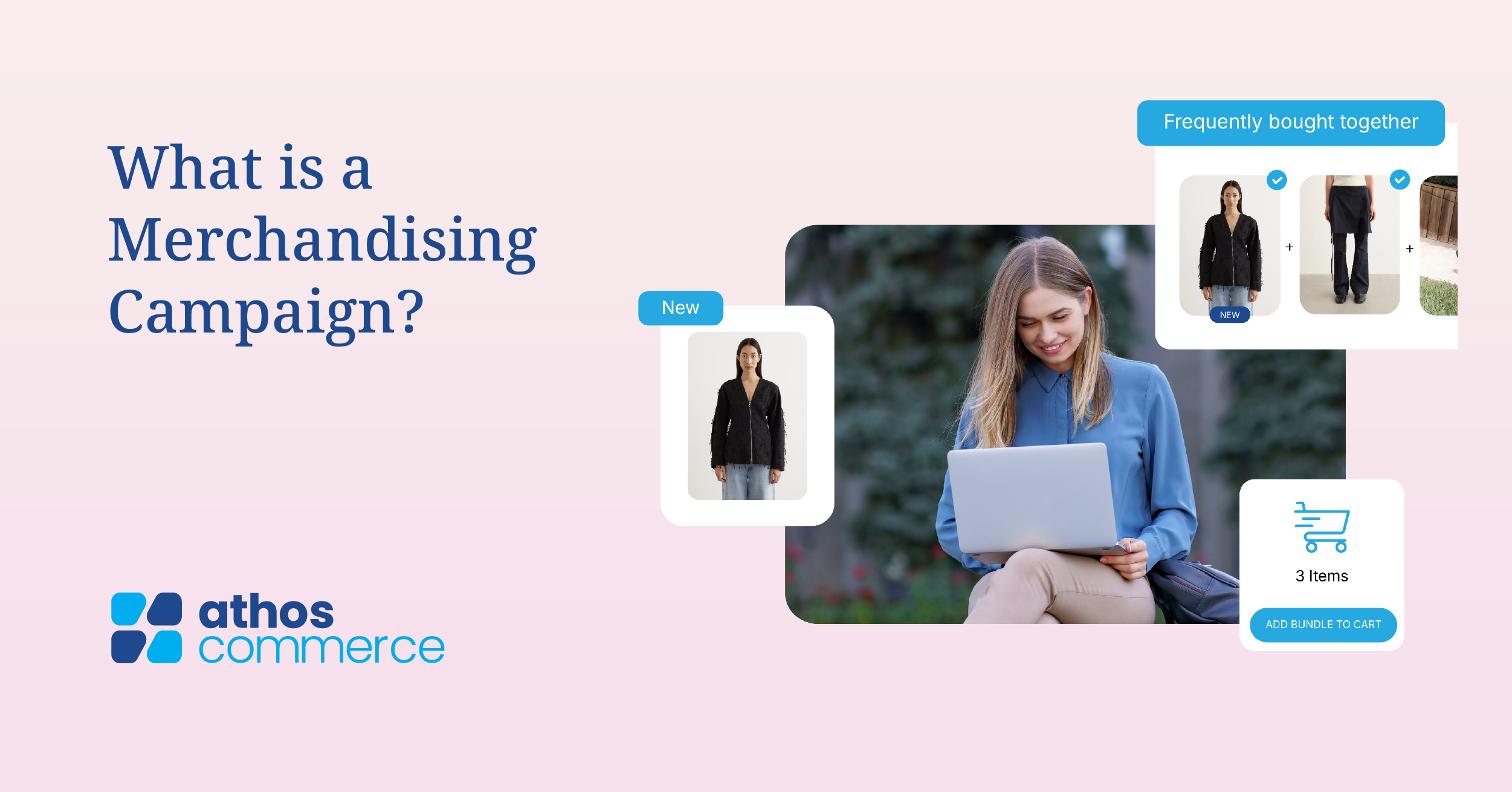
Athos Commerce ranks recommendations using shopper history, live session signals, and catalog performance. If someone views a jacket, the system can show similar products in the same category or complementary items that people often buy together. Because the ranking updates in real time, shoppers see the right product at the right time rather than a static list.
Yes. A product description tells the shopper what the item does, and high-quality images tell them what it looks like. Both feed the ranking signals that decide what appears in a search result. Consistent imagery and copy also support your brand identity, so your store looks the same across every page. Strong, detailed product descriptions reduce returns, which lifts customer satisfaction over time.
You can. Reviews, ratings, and photos are all user-generated content, and Athos Commerce can use those signals to rank products or apply badges. Social media traffic often lands on landing pages built for a campaign, so merchandising rules apply there too. Athos Commerce also syndicates your catalog to social media channels and marketplaces, which helps online retailers reach shoppers before they ever visit the site.
Yes. Mobile phones account for most online shopping traffic for many merchants, and smaller screens show fewer products at once. That makes ranking matter more, not less. Athos Commerce applies the same rules across desktop and mobile, so the customer experience and the shopping experience stay consistent no matter how someone browses.
Start by picking one metric you want to move, such as revenue per visit. Then map your top search terms and category pages and check what currently ranks in each. From there, set boost rules for the products you want to push and run A/B tests to confirm the change works. Strategic merchandising works best when you make data-driven decisions instead of relying on opinion. Review results monthly and retire rules that stop performing.
An ecommerce merchandiser decides what shoppers see and why. That includes curating category pages, pinning products for seasonal campaigns, reviewing customer behavior reports, and running tests. With Athos Commerce, most of that work happens in a no-code interface. Automation handles repetitive rules, which frees the merchandiser to focus on strategy and on ways to boost sales.