






0.1 seconds. That’s all it takes to start forming an impression of someone you’ve never met before, according to research by Princeton psychologists1, first published in Psychological Science. We quickly look for signs of trustworthiness as a baseline for safety. But what about judging products and brands?
Think about how many products and brands shoppers see every day. It likely outnumbers the people they’ll meet. It makes sense that when they see a product on Google Shopping, social platforms, marketplaces, or AI-driven discovery channels, they’re also making those split-second judgements.
When they see your product listing, they may be thinking, “Is this product relevant? Is it worth my time? Is this the best choice amongst competitors?” When the answer is no, shoppers move on. When the answer is yes, you’ve just earned their click and their first layer of trust. Now you need to keep it throughout discovery and checkout.
Before the click: Product feed optimization
Before a shopper lands on your website, your product feed is doing the work. It determines how your products appear in Google Shopping, social platforms, marketplaces, and AI-driven discovery channels. If your data is incomplete or inconsistent, your products may not show up for shoppers. Those that do show up often don’t engage shoppers enough to earn their click.
Strong product feed optimization focuses on the fundamentals:
- Complete and accurate attributes
- Clear, structured titles and descriptions
- Consistent taxonomy across channels
- Up-to-date pricing and availability
Get these data foundations right, and you gain visibility and that first moment of trust. To take the hard work out of that foundational stage, Athos Commerce is introducing the Channel Assistant, part of the company’s feed management and intelligent discovery platform. It helps retailers run automated feed audits, catch issues before they trigger disapprovals, and syndicate optimized product data across 1,400+ partner feed templates.
The high-intent moment: Your search bar
Once a shopper lands on your site, the next trust test comes quickly. How easy or difficult is it to find products on-site? Search bar use is a high-intent action. The shopper knows what they want. Now they’re asking, “Can you help me find it?”
Basic keyword matching often leads to irrelevant results. Filters may not align with intent. The shopper encounters zero-results pages. Trust begins to erode.
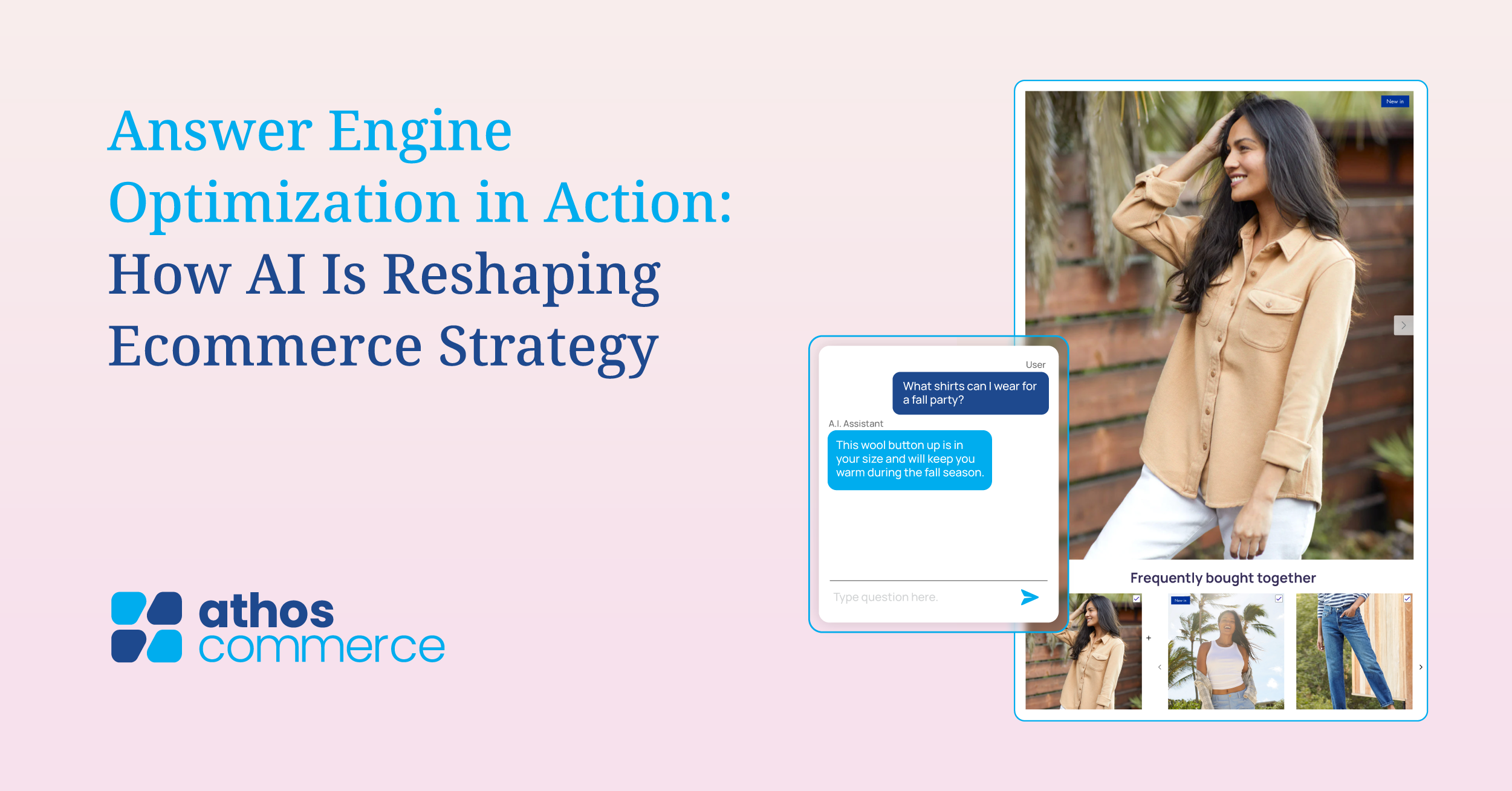
AI-driven on-site search understands intent, not just keywords. If a shopper searches for “black running shoes under $150”, your search function should recognize attributes such as colour, category, price, and intended purpose. It should guide them, refine results, and keep them moving forward.
When search works well, it reinforces trust. It tells the shopper they are in the right place and that you’re here to help them. Athos Commerce Site Search understands shopper intent, beyond keywords and across 31 languages, to reduce those zero-results dead ends and build that trust with your shoppers.
Guiding shoppers: Merchandising that builds confidence
Merchandising further shapes how shoppers discover your products on-site. It offers a way to guide and inspire them while they browse. Good merchandising doesn’t just put random products in front of shoppers. Much like in-store merchandising, there’s a method in deciding which products will best showcase your brand.
New arrivals show the freshness of your product range. Bestsellers offer an important signal of popularity and underlying social proof. Category pages help shoppers explore their interests. Each touchpoint is another trust signal.
Done well, merchandising creates momentum. Shoppers move from discovery to consideration without friction. They see products that inspire and feel right for them. Done poorly, it can add to the noise with too many irrelevant products and too much effort required from the shopper. And the path to conversion is one of least resistance.
Athos Commerce Merchandising gives retailers the control they need to put the right products in front of the right shoppers, across their entire site. Using boost rules, automated pinning, and behavior-driven discovery, it keeps high-performing and high-margin products front and centre. At the same time, automated merchandising pushes out-of-stock or underperforming items out of sight, so every shopper interaction feels fresh, relevant, and carefully considered.
Trust is built through connected moments
The journey from discovery to checkout hinges on a series of connected, impactful moments. The retailers making notable gains are those treating product feeds, search, and merchandising as a single ecosystem rather than separate triggers.
To help your shoppers make that connected journey, ensure strong product data foundations to show up in the right places. optimize on-site search to help shoppers find what they need. Merchandise effectively, so the experience feels fresh and engaging. Build your shoppers’ trust and earn their clicks, from discovery to checkout.
0.1 seconds may be all it takes for a shopper to take that first step towards your online store. From there, it’s up to you to create experiences they remember.
Explore how Athos Commerce delivers connected, intelligent discovery that works across on-site and off-site channels. Start with your complimentary demo today.
About Athos Commerce
Athos Commerce is the only intelligent product discovery platform that connects shoppers to the right products across on-site and off-site channels. More than 2,000 brands use Athos Commerce to power AI-driven search, merchandising, personalisation, and product feed management from a single platform. Customers include Rip Curl, Kathmandu, David Jones, Endeavour Group, Accent Group, and many more. With commerce roots dating to 2007, Athos Commerce operates across Asia-Pacific, North America, and Europe.
Sources & further reading
- How Many Seconds to a First Impression? July 1, 2006 https://www.psychologicalscience.org/observer/how-many-seconds-to-a-first-impression
FAQs
What is product feed optimization, and why does it matter for online retailers?
Product feed optimization is the process of ensuring your product data is complete, accurate, and consistently structured across every channel where your products appear, including Google Shopping, social platforms, marketplaces, and AI-driven discovery channels. Without strong feed foundations, products may not show up at all, or may fail to earn a shopper’s click when they do. Getting attributes, titles, descriptions, pricing, and availability right is the starting point for visibility and trust.
How does AI-driven on-site search differ from basic keyword matching?
Basic keyword matching returns results based on the literal words a shopper types, which can lead to irrelevant results, poor filtering, and dead-end zero-results pages. AI-driven on-site search understands intent, recognizing attributes such as colour, category, price, and purpose from a single query. So a search for “black running shoes under $150” returns genuinely relevant results rather than anything containing those words, keeping shoppers moving forward rather than bouncing.
Why do shoppers lose trust during the online shopping journey?
Trust erodes at specific friction points: irrelevant search results, zero-results pages, inconsistent or incomplete product information, and poorly organized category pages. Research suggests shoppers form initial impressions in as little as 0.1 seconds, and those split-second judgements extend to products and brands as well as people. Each moment of friction is a signal to the shopper that they may not be in the right place.
What is merchandising in ecommerce, and how does it build shopper confidence?
Ecommerce merchandising is the practice of strategically deciding which products to surface, where, and to whom across on-site search results, category pages, and landing pages. Done well, it guides shoppers from discovery to consideration without unnecessary friction, using signals like new arrivals, bestsellers, and relevant category groupings to reinforce trust. Done poorly, it creates noise and adds effort for the shopper, which increases the chance they leave without converting.
Where should an online retailer start when improving product discovery?
Start with your product data. A strong feed with complete and accurate attributes, clear titles and descriptions, consistent taxonomy, and up-to-date pricing and availability underpins everything else. From there, address on-site search so shoppers can find what they need once they land on your site, then look at how merchandising shapes the broader browsing experience. Treating feed management, search, and merchandising as a connected ecosystem rather than separate functions will have the greatest impact.
How do product feeds, on-site search, and merchandising work together?
These three functions form a connected discovery ecosystem. Product feeds determine whether and how your products appear off-site, in channels like Google Shopping, social platforms, and marketplaces. On-site search handles high-intent shoppers who arrive knowing what they want. Merchandising shapes the broader browsing experience for those who are still exploring. When all three are optimized and aligned, shoppers move from discovery through to checkout with less friction and more confidence.