























300%
Growth in search led revenue

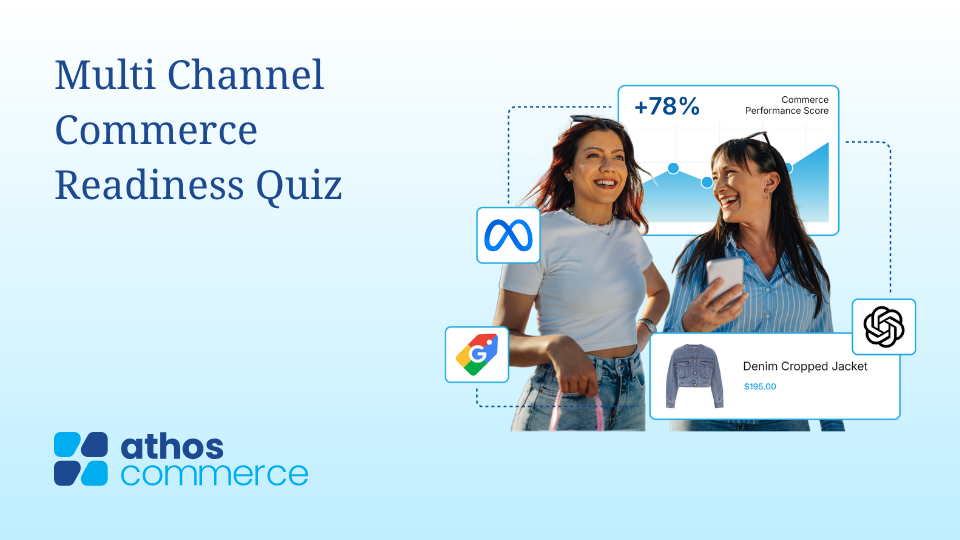
Assess your multi-channel commerce readiness in minutes. Identify gaps in product data, discovery, and channel strategy with actionable insights to improve performance.
Most platforms were built for traditional search. Athos Commerce was built for the AI world. Where discovery works as one experience, and every surface learns from every other.

Growth in search led revenue

Saved per week on merchandising tasks

Revenue increase driven by personalization


Increase in revenue per visit

The AI world has raised the bar on what a Search and Discovery platform must do, and exposed where most platforms fall short. Every ecommerce brand runs into the same four challenges, and each has an evaluation criterion that separates the platforms that solve it from the ones that cannot.
Most search tools handle simple queries fine. Ask a natural language question the way a shopper actually thinks, use long tail terms, or search across multiple attributes and results thin out. Zero result pages appear. Revenue leaks quietly and the team cannot see where or why.
The platform AI should be trained on commercial intent and shopper behavior, not on general web search signals. Relevance in commerce means understanding product attributes, catalog depth, and purchase intent, not just matching keywords. John Smedley grew search led revenue 300% on a commerce native AI foundation.
Boost rules, campaign launches, category adjustments, badge logic. Every meaningful change runs through engineering. Merchandisers wait on tickets while seasonal moments pass. In the AI world, that gap gets worse: shopper behavior moves faster than the queue can, and the platform your team paid for is quietly working against them.
Your merchandising team should launch campaigns, adjust rankings, test placements, and publish changes directly, and stay in charge of what the AI surfaces. If every change requires an engineering ticket, the platform is working against your team. Early Settler saved 10 hours a week after switching to a merchandiser first platform.
Personalization in most platforms means widgets on the homepage and basic ranking on search. The AI runs one part of the experience while everything else runs on rules from ten years ago. Brands needing one to one experiences across search, category pages, email, and campaigns find a black box or a paid add on.
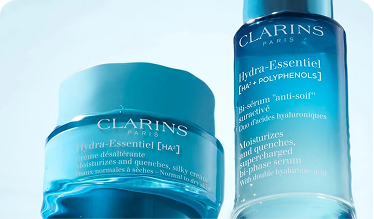
Search results, category pages, recommendations, email, and conversational discovery should all run on the same product data layer. When each surface runs on separate logic, improvements in one place do not carry into others. Clarins drove a 322% revenue increase on a unified ecommerce personalization foundation.
Most vendors in this segment built their platforms around a search bar and have been retrofitting conversational features ever since the AI world arrived. Those features run on separate logic, separate data, and separate infrastructure. Shoppers get disconnected answers. Brands get fragmented data no one can tie back to revenue.
Any vendor can put a conversational AI agent on a roadmap. What matters is whether it is in production today, trained on your catalog, and running on the same AI foundation as your search and personalization. A shopping agent in beta is not a platform capability.

Athos AI is trained on commercial intent and shopper behavior, not on general web search signals. Every algorithm decision is optimized for revenue, conversion, and AOV, not for query response time.

Every campaign, every placement, every test, launched directly by the merchandising team. No tickets. No queue. You stay in control of what the AI surfaces, on your terms, without waiting on engineering.

Search, merchandising, personalization, and conversational discovery all run on the same AI and the same product data layer. When your catalog improves, every surface learns and improves at the same time.

Clarins drove a 322% revenue increase. John Smedley grew search led revenue 300%. Michael Stars generated a 951% lift in revenue per visit. Aje drives 10% of total revenue from Athos.


Athos AI is designed for transparency. Your team can see why any product ranked where it did, override the AI when it is wrong, and set business rules the AI has to respect. The AI does the heavy lifting on relevance. Your merchandising team stays in charge of every outcome.
No. Athos runs on distributed cloud infrastructure built to deliver results at commerce speed, even under peak traffic. Search results, recommendations, and merchandising decisions are served fast enough that shoppers experience the platform as instant. Site speed and Core Web Vitals scores are protected.
Yes. Athos is designed to connect to any commerce platform through open APIs and existing integrations. Whether you run on Shopify, BigCommerce, Salesforce Commerce Cloud, Adobe Commerce, or a headless custom stack, Athos runs on top of what you have. There is no requirement to replatform to work with Athos.
Athos offers three plans as a starting point: Onsite Discovery (search, merchandising, and personalization on your site), Offsite Discovery (product feed management across channels), and the Intelligent Discovery Platform, which combines both. Each plan is priced to your specific needs. Single products or custom combinations can also be quoted. Request pricing for what fits your needs.
Your data is yours. Athos does not use your product or shopper data to train models for other customers. All data is encrypted in transit and at rest, hosted on trusted cloud infrastructure, and handled to enterprise standards. Details on GDPR, CCPA, SOC 2, and ISO 27001 compliance are available on request.